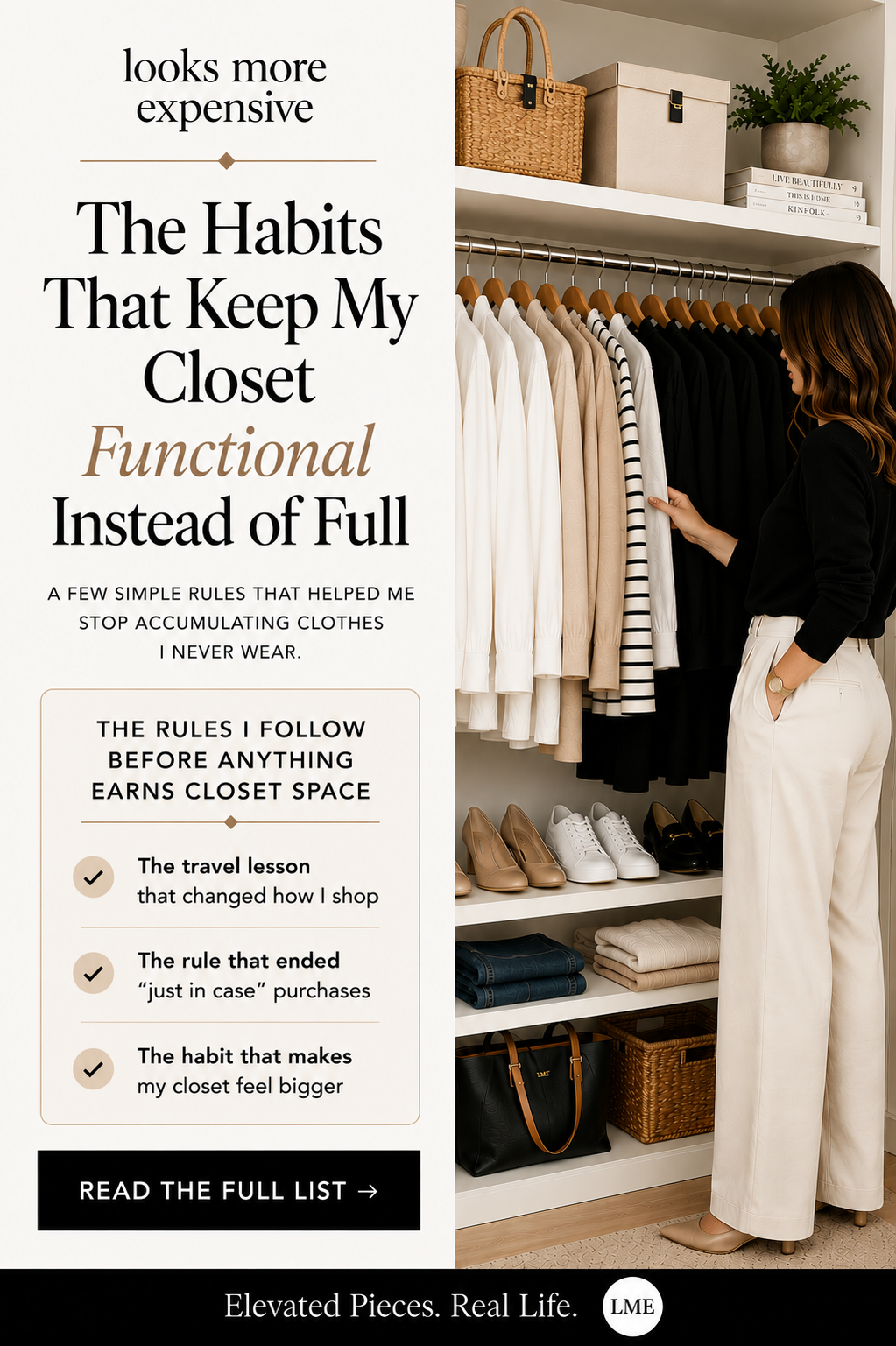
The Habits That Keep My Closet Functional Instead of Full
I don’t have a minimalist closet.
In fact, my closet is fairly large. It holds everything from conference outfits and airport clothes to workout gear, beach pieces, coats, dresses, handbags, and shoes.
But over the years, I’ve learned that the size of a closet has very little to do with whether it feels functional.
I’ve had smaller closets that felt packed with things I never wore. I’ve also had larger closets that felt surprisingly easy to manage because the pieces inside actually worked for my life.
Today, I spend very little time standing in front of my closet wondering what to wear. That’s not because I have fewer options. It’s because I’ve developed a few habits that help me buy better, wear more of what I own, and avoid filling valuable closet space with things that don’t earn their keep.
I Shop for the Life I Actually Live
One of the biggest lessons I’ve learned came from years of work travel.
After packing for conferences, client meetings, delayed flights, and last-minute trips, I started noticing something. The pieces that made packing easier were usually the same pieces that made getting dressed easier at home.
The clothes I reached for most often weren’t necessarily the trendiest. They were the most useful.
Now, before I buy something, I ask myself a simple question:
Does this fit the life I actually live?
Not the life I imagine. Not the life I might have someday.
The life I have right now.
Travel has probably influenced my shopping habits more than anything else. When you spend enough time packing carry-ons and conference outfits, you learn quickly which pieces earn their place. I talked more about that in How I Pack Carry-On Only for Conferences.
I Stopped Buying “Just in Case”
This habit alone has probably saved me more money than any budgeting trick.
For years, I would occasionally buy things because I thought I might need them someday.
A dress for an event that wasn’t on the calendar.
A trend I thought I might eventually wear.
A pair of shoes that seemed like a good idea at the time.
Most of those purchases spent far more time hanging in my closet than being worn.
Now I buy for real needs, not hypothetical ones.
If the event shows up later, I can always shop for it then.
One thing that helped me stop making those purchases was creating a simple decision-making process in the fitting room. If you’ve read The 10-Minute Fitting Room Test, you’ll recognize some of the same thinking here.
Every Piece Has to Work Hard
The pieces that survive longest in my closet are rarely the most exciting.
They’re the ones that do multiple jobs.
One reason I own multiple Trendy Queen tees and more than one pair of Spanx pants is simple: I know they’ll get worn.
The pieces that earn permanent space in my closet can usually travel, work, run errands, and handle everyday life without requiring much thought.
The more ways I can wear something, the more valuable it becomes.
This is the same idea I talked about in The Pieces That Earn Permanent Closet Space: Summer Edition. The pieces that stay in my closet year after year are almost always the ones that serve multiple purposes and get worn repeatedly.
I Care More About Cost Per Wear Than Price Tags
These days, I spend less time looking at what something costs and more time thinking about how often I’ll use it.
A piece I wear fifty times is almost always a better purchase than something cheaper that gets worn twice.
That shift has helped me buy fewer items while feeling much better about the purchases I do make.
I Let Go of “Someday Sizes”
For a long time, I kept clothes that didn’t fit because I thought I might need them again one day.
What I eventually realized was that those pieces weren’t helping me.
They were taking up space, creating clutter, and making it harder to see the clothes I actually loved wearing.
Today, I keep clothes that fit the life and body I have right now. I store the ones that I might get back to later due to weight fluctuations in a vinyl moving bag in another closet.
That one change made my closet feel significantly more functional.
I Pay Attention to My Repeat Performers
Every closet has repeat performers.
Mine include my Spanx leggings, Trendy Queen tees, favorite travel pants, and a handful of shoes that seem to end up on my feet week after week.
Instead of constantly looking for something new, I’ve started paying attention to what I already reach for.
When I find something that genuinely makes life easier, I’m much more likely to buy another color than start searching for a replacement.
That’s also why I wrote The Neutral Pieces I Rewear Constantly. The clothes I reach for most often usually aren’t the trendiest pieces in my closet. They’re the ones that make getting dressed easier.
I Edit Regularly
A functional closet isn’t something you organize once and forget.
A few times a year, I take a look at what’s actually being worn and what isn’t.
If something hasn’t earned its space, I let it go.
That’s exactly what led to The Closet Reset That Made Getting Dressed Easier. Sometimes the answer isn’t buying something new. It’s simply paying attention to what’s already there.
That habit keeps my closet manageable no matter how full it gets.
The Bottom Line
My closet isn’t small.
It holds conference outfits, travel clothes, workout gear, beach pieces, winter layers, handbags, and everything in between.
But it feels functional because the pieces inside have earned their place.
That’s the goal.
Not owning less.
Not following someone else’s version of a capsule wardrobe.
Just building a closet full of pieces that support your real life, get worn often, and work hard enough to stay. -LME
*This post may contain affiliate links. If you purchase through these links, I may earn a small commission at no additional cost to you. I only recommend products I personally use, love, or genuinely believe are worth sharing.
Enjoyed this post? Join The Best of The Edit for favorite finds, practical tips, and the most-loved posts from Looks More Expensive.