How I Stayed Warm for Two Weeks Above the Arctic Circle (in One 24” Suitcase)
When people found out my mom and I were spending two weeks in Norway, Finland, and Sweden in January — mostly above the Arctic Circle — the first question was almost always:
“How on earth did you pack for that?”
And honestly? I wondered the same thing before we left.
The sun barely rose some days. Everything felt washed in the softest shades of blue — like dusk or pre-dawn that never fully ended. Harbor towns glowed against the snow, ferries moved through icy water under the northern lights, and we spent long days outdoors near the Barents Sea in temperatures far colder than anything I’d experienced before.
It was one of the coldest trips I’ve ever taken.
And somehow?
It was also one of the easiest trips I’ve ever packed for.
This wasn’t just a quick winter getaway. We spent nearly 90% of the trip above the Arctic Circle — including areas near Murmansk, Russia — with snowmobiling excursions, king crab fishing, reindeer sled rides, northern lights chasing, icy harbor towns, and long outdoor days in serious Arctic temperatures.
I knew I needed:
real warmth
waterproof protection
comfortable travel outfits
practical layering systems
and pieces I could repeat constantly
But I also refused to bring multiple giant suitcases full of bulky winter gear.
So instead, I focused on something I’ve learned matters far more than overpacking: intentional layering.
And somehow?
I fit everything into a single 24” suitcase.
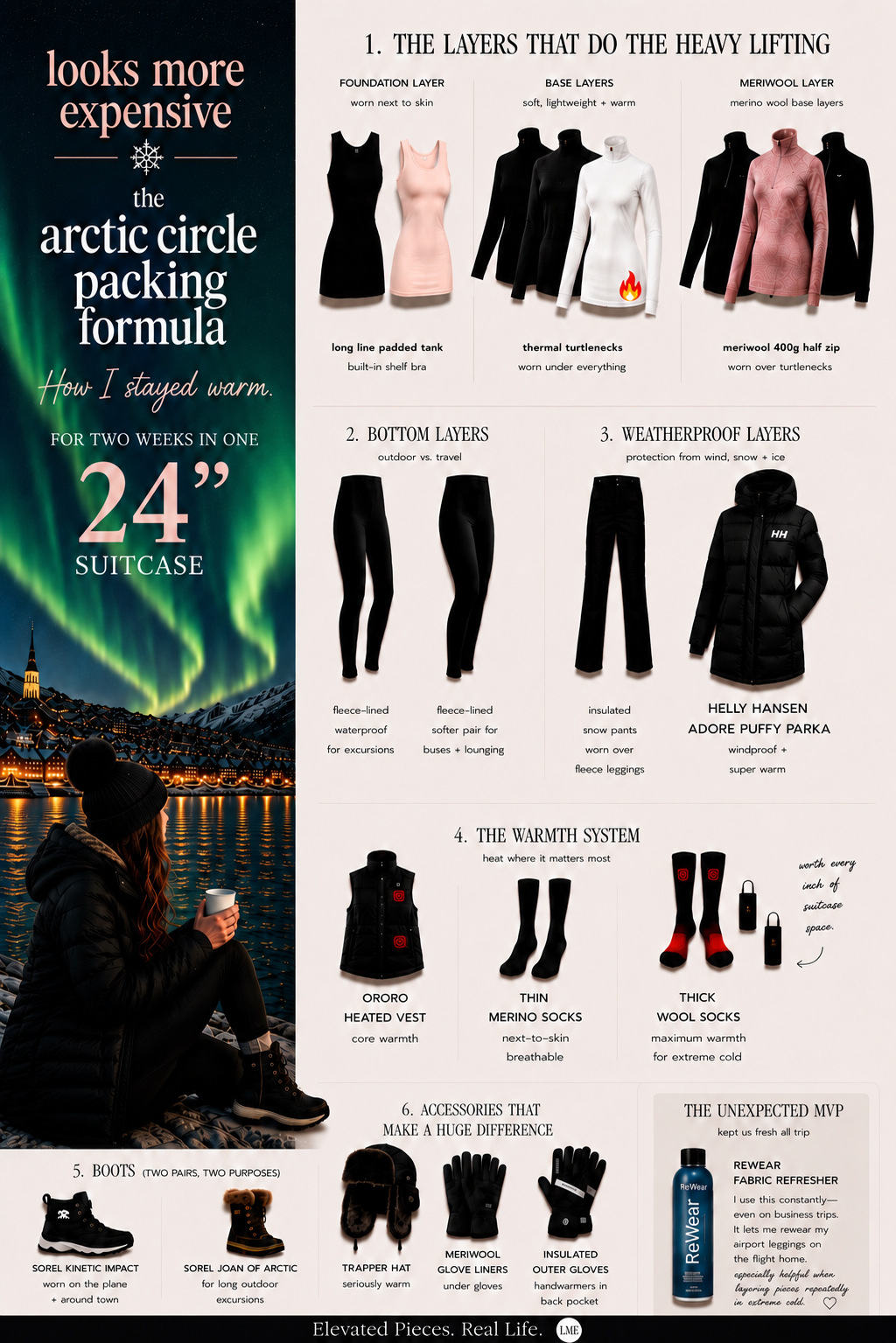
The Biggest Lesson: Layers Matter More Than Bulk
The entire trip came down to layering thoughtfully instead of packing excessively.
Rather than bringing giant heavy sweaters for every single day, I packed:
lightweight foundation layers
thermal base layers
merino wool insulation
weatherproof outer layers
heated accessories
and versatile pieces that all worked together
That combination kept me warm in genuinely brutal temperatures without constantly feeling weighed down by oversized winter gear.
And because everything layered together so intentionally, I was able to rotate the same pieces repeatedly without feeling like I was wearing the exact same outfit every day.
The Foundation Layer That Made Everything Work
Under almost everything, I wore my CRZ Yoga longline padded tanks.
These were honestly underrated heroes of the trip.
They added:
light insulation
support
coverage
and comfort
without adding unnecessary bulk.
I especially loved them because they eliminated the need for additional bras or complicated underlayers beneath all the thermal pieces.
When you’re getting dressed for Arctic temperatures every morning, simplifying your layering system matters more than you’d think.
The Thermal Turtlenecks I Wore Under Everything
Over the tanks, I layered lightweight thermal turtlenecks.
These became the true “wear constantly” pieces of the trip.
They were:
soft
lightweight
surprisingly warm
easy to rotate
and thin enough that nothing ever felt restrictive
Because they sat close to the body, they trapped warmth incredibly well underneath the merino wool half-zips.
And despite how cold it was outside, I never felt overwhelmingly bulky indoors.
That balance mattered because Arctic travel constantly shifts between:
freezing outdoor temperatures
warm buses
ferries
restaurants
hotels
and activity centers
You need layers that regulate easily without constantly overheating.
The Merino Wool Half-Zips Were Worth Every Penny
If I had to choose the MVP clothing category from the trip, it would probably be the heavyweight Merino wool half-zips.
I packed three:
black
charcoal
and heather pink
And rotated them constantly.
They were:
incredibly warm
breathable
odor-resistant
comfortable for travel
and somehow never felt damp or heavy
Even after long outdoor days.
Merino wool truly lives up to the hype in extreme cold.
The half-zip style also made temperature regulation easy:
zipped fully outdoors
partially open indoors
layered comfortably under jackets and heated vests
They became the core of my entire packing formula.
And honestly?
By the second week, I realized nobody above the Arctic Circle cared whether your outfit repeated — they cared whether you were warm.
The Legging System That Actually Worked
For most of the trip, I alternated between two fleece-lined leggings:
one thicker pair for excursions
and one thinner pair for buses, ferries, and hotel evenings
Then, during longer outdoor activities, I layered insulated snow pants over top.
That combination worked unbelievably well.
The snow pants blocked:
wind
snow
moisture
and icy air
while the fleece-lined leggings underneath kept everything comfortable without feeling bulky.
And because the snow pants were only worn when needed, I wasn’t constantly overheating indoors.
The Heated Pieces Changed Everything
I genuinely underestimated how useful heated gear would be.
My heated vest became one of the smartest things I packed.
It was especially perfect for:
cold buses
ferries
northern lights excursions
outdoor night activities
and long stretches spent standing outside in freezing temperatures
The best part?
It allowed me to stay warm without constantly needing the massive parka indoors.
And for longer outdoor excursions, heated socks inside my Sorel boots were absolute game changers.
Especially during:
snowmobiling
king crab fishing
reindeer sled rides
Once your feet get cold, everything gets miserable fast.
The heated socks solved that problem completely.
Why I Packed Two Different Boots
This ended up being one of the smartest packing decisions I made.
I wore my Sorel Kinetic Impact boots:
on the plane
around town
on buses
and for most everyday walking
The sidewalks in the Arctic towns were actually maintained much better than I expected, and these gripped surprisingly well even on occasional icy patches.
Then I packed my heavier Joan of Arctic boots in the suitcase specifically for:
deep snow
longer outdoor excursions
snowmobiling
and colder activity days
Having two distinct boot purposes made packing feel dramatically more efficient.
The Unexpected MVP: REWEAR
Oddly enough, one of the smartest things I packed wasn’t clothing at all.
It was REWEAR fabric refresher spray.
Because we were constantly moving between hotels, ferries, buses, and excursions, we really didn’t have access to consistent laundry service throughout the trip.
We could occasionally wash underwear and socks in hotel sinks if we stayed somewhere more than one night, but that was about it.
REWEAR made it possible to continuously rotate layers — especially leggings, merino wool pieces, and travel outfits — without everything feeling stale by the second week.
And honestly?
It worked incredibly well.
Arctic temperatures are so cold that we really weren’t sweating much at all, so refreshing pieces between wears became far more practical than trying to wash bulky winter layers constantly.
I even bring this on business trips now so I can rewear my airport leggings on the flight home.
That one little product made packing dramatically easier.
The Sock Layering System That Made a Huge Difference
One thing I underestimated before this trip was just how important sock layering would become.
Under everything, I wore thin merino wool socks.
These became the everyday foundation layer for my feet:
lightweight
breathable
moisture-wicking
and warm without feeling bulky inside my boots
I wore them constantly — whether we were:
walking through Arctic harbor towns
riding buses between countries
boarding ferries
or spending long days outside in the snow
For colder or longer outdoor days, I would either:
layer thicker wool socks over the thin merino pair
or switch to heated socks for outdoor excursions
And honestly?
The heated socks were incredible.
Especially during:
snowmobiling
king crab fishing
reindeer sled rides
and long stretches spent standing outdoors under the northern lights
They kept our feet unbelievably warm.
And in Arctic temperatures, warm feet make an enormous difference in your overall comfort level. Once your feet get cold, everything else starts feeling cold too.
That layering combination:
thin merino base socks
thicker wool layers when needed
heated socks for longer outdoor excursions
ended up being one of the smartest systems I packed for the entire trip.
The Three Accessories That Earned The Suitcase Space
My trapper hat, glove liners, and insulated gloves helped keep my head and hands warm the entire trip.
Did I worry about looking silly with the hat? Absolutely not. Function over fashion when it’s -14 degrees outside.
The glove liners were great for shorter excursions - they allowed me to still work my camera and kept my hands pretty warm. But for the longer excursions, the insulated gloves over top of the glove liners were crucial - and I used the pockets on the back to put HotHands packets in to add an extra “oomph” of warmth.
Final Thoughts
Before this trip, I assumed Arctic travel required:
enormous luggage
endless bulky coats
and excessive overpacking
But what I learned instead was:
feeling prepared is far more valuable than packing excessively.
The key wasn’t bringing more.
It was bringing:
versatile pieces
intentional warmth systems
breathable fabrics
and layers that all worked together
I’d pack almost this exact formula again tomorrow. -LME
*This post may contain affiliate links. If you purchase through these links, I may earn a small commission at no additional cost to you. I only recommend products I personally use, love, or genuinely believe are worth sharing.
Enjoyed this post? Join The Best of The Edit for favorite finds, practical tips, and the most-loved posts from Looks More Expensive.